Seaweed biostimulant trial to support resilient potato production
Dyson Farming Research partners with Atlantic Marinaculture on innovative seaweed biostimulant trial to support resilient potato production
Dyson Farming Research is working in collaboration with Atlantic Marinaculture as part of a funded project exploring how natural, seaweed-derived inputs can support crop performance under increasingly variable growing conditions.
The project focuses on the use of a biostimulant produced from cultivated brown seaweed, developed by Atlantic Marinaculture, and its potential to improve the resilience of potato crops exposed to drought stress. As water availability becomes less predictable, growers are facing growing challenges in maintaining yield, tuber quality and overall crop value. This work aims to generate clear, field-based evidence to help address those risks.
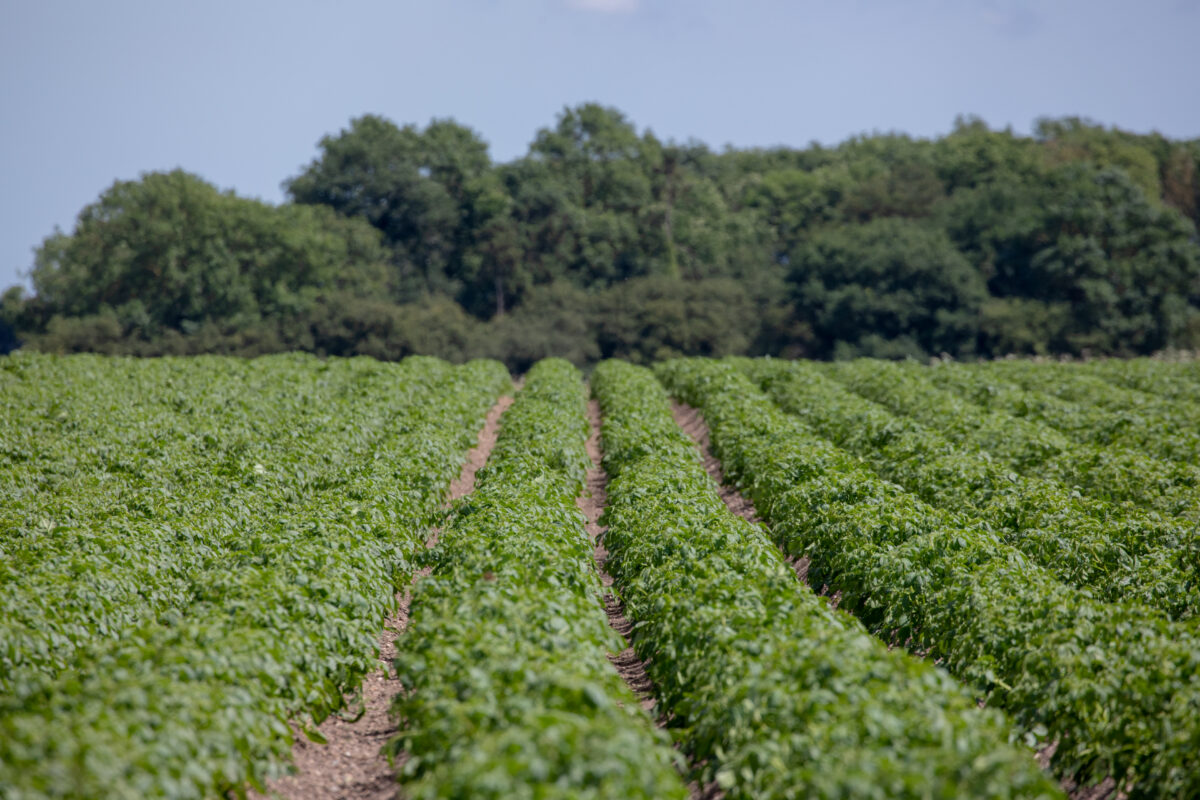
Dyson Farming Research is leading the on-farm evaluation, conducting farmer-led trials on a commercial potato farm over two growing seasons. The trials are designed to reflect real-world conditions, comparing standard agronomic practice with different biostimulant application strategies, including timing at key crop growth stages and ahead of anticipated drought periods.
Throughout the programme, the team will assess key performance indicators such as yield, tuber size and quality, as well as the proportion of marketable crop. By capturing detailed data across the growing season, Dyson Farming Research aims to identify where and when the biostimulant delivers the greatest benefit, providing a more complete understanding of crop response under stress conditions.
A core objective of the collaboration is to translate trial outcomes into practical guidance for growers. The project will generate insights to support decision-making on the use of seaweed biostimulants, helping farmers improve crop resilience, reduce production risk and adopt more sustainable approaches to potato production.
This partnership reflects Dyson Farming Research’s broader role in testing emerging technologies and agronomic approaches at scale. By providing an independent, commercial farming environment for evaluation, the team is able to assess both the agronomic performance and operational fit of new solutions under realistic conditions.
Atlantic Marinaculture’s approach to cultivating seaweed for biostimulant use offers a controlled and consistent feedstock, which may improve reliability compared to products derived from wild-harvested sources. Through this collaboration, both partners are contributing to a growing body of evidence on how biological inputs can support productive, resilient farming systems in a changing climate.
As the trial progresses, findings will contribute to a wider understanding of how growers can integrate nature-based solutions into existing cropping systems, balancing productivity with environmental and operational considerations.
The Estate Office,
Cyclone Way, Nocton,
Lincoln LN4 2GR